In postwar Britain, a young person with a factory job and very little else could still afford one thing that felt like freedom: a used motorcycle. Cars were expensive. Bikes were not. And on the wide arterial roads around London, a generation of teenagers worked out how to make their ordinary machines go as fast as physically possible.
Their clubhouse was a truck stop. The Ace Cafe, which opened in 1938 on the North Circular Road, stayed open around the clock and served cheap food and hot tea to drivers. By the 1950s, it had become the unofficial headquarters of the “ton-up boys,” riders whose central ambition was to hit a hundred miles per hour, the ton, on a public road.
Legend has it they'd drop a coin in the jukebox, tear off to a set point on the road and try to get back before the song ended. Whether that happened as often as the stories claim is hard to verify, but it's the kind of tale that sold the whole idea, and it's still being told.
Speed on a budget created a look
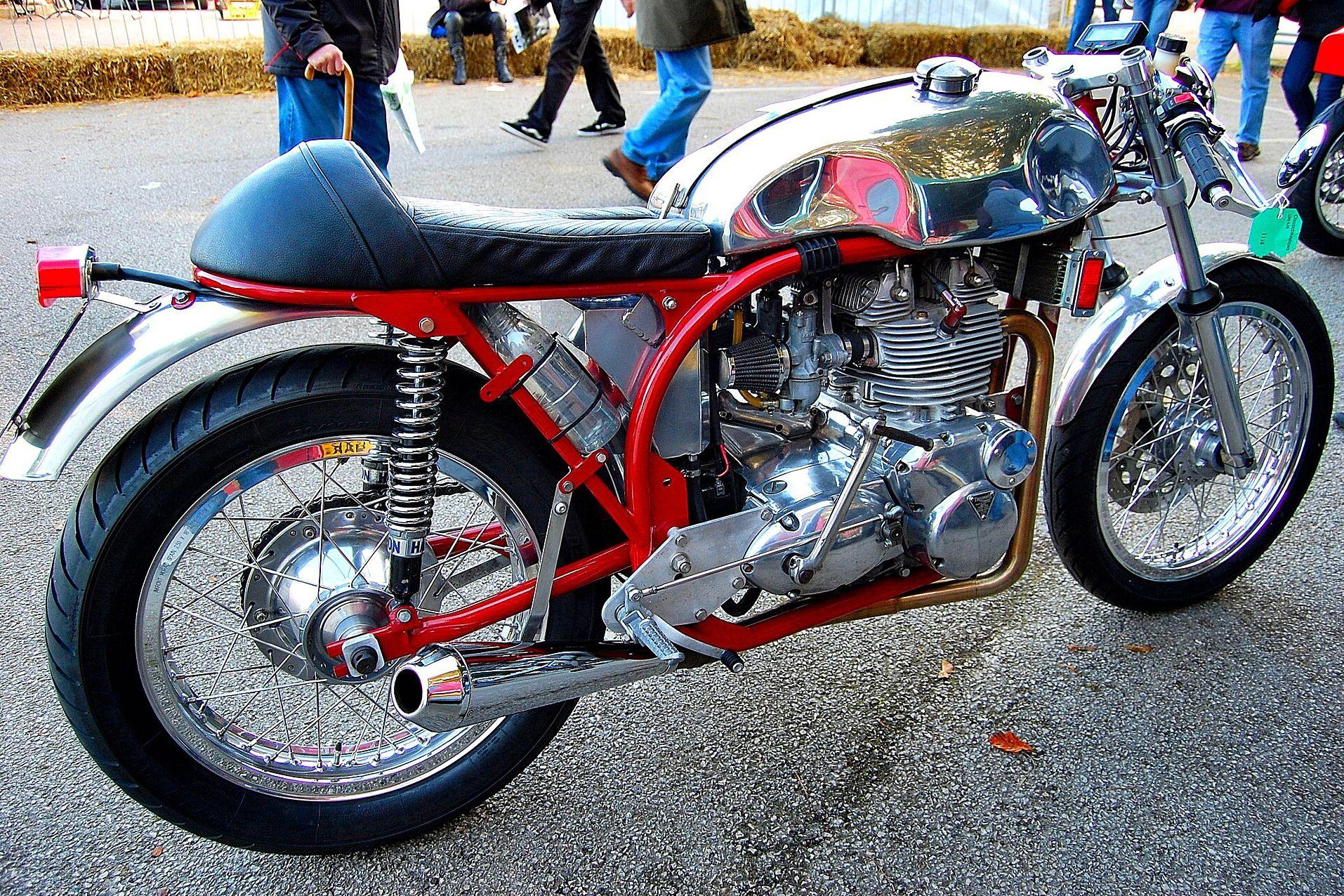
Everything that makes a cafe racer look so good started as a way of going faster for free. Heavy fenders and comfort parts were removed. Low clip-on handlebars pulled the rider into a tuck. Footpegs moved rearward to match. A long, narrow tank and a single humped seat completed the silhouette, stretching from the bars to a tail that seemed to lean into the wind.
The most obsessive builders went further still. The famous Triton combined a Triumph twin engine with Norton's Featherbed frame, marrying what many riders viewed as the best motor of the era with the best handling. No factory sold you that bike. You had to make it, or know someone who could.
Every part of the silhouette began as an answer to the same question: what can come off?
Why the style came back, and stayed back
British motorcycling faded from its dominance, and the Ace Cafe itself closed in 1969. But the idea proved difficult to kill. In the decades that followed, home builders found that aging Japanese bikes, Honda's CB series among them, made cheap and reliable donors. Today a builder with a garage, some patience and a budget of a few thousand dollars can make something that gets more looks than a new superbike.
Manufacturers noticed. Triumph's Thruxton and Royal Enfield's Continental GT sell the same low-slung posture from the showroom floor, with modern brakes and warranties to go with it. The Ace itself reopened on the original site and is once again a gathering point for riders from across Europe.
If you're tempted to build one
Start with the bike rather than the look. Buy the cleanest, most complete and best-documented donor you can find, because a cheap bike with a mystery engine isn't cheap. Learn the basics before cutting anything. Keep the stock parts when you can. And remember that clip-ons are a real commitment: they're terrific at speed and quite punishing in city traffic.
Then budget for proper protective gear before chrome. The original ton-up boys rode in little more than leather jackets, and a good many of them paid dearly for it. Your wrists will also appreciate some attention once you've spent an hour folded over those bars, so it's worth working through a quick strength routine you can do anywhere.
Seventy years on, the appeal hasn't really changed. A cafe racer is a bike with nothing to hide, built around the belief that less machine can somehow be more fun. It's also a reminder that the coolest things are often what people created when they couldn't afford the alternative.