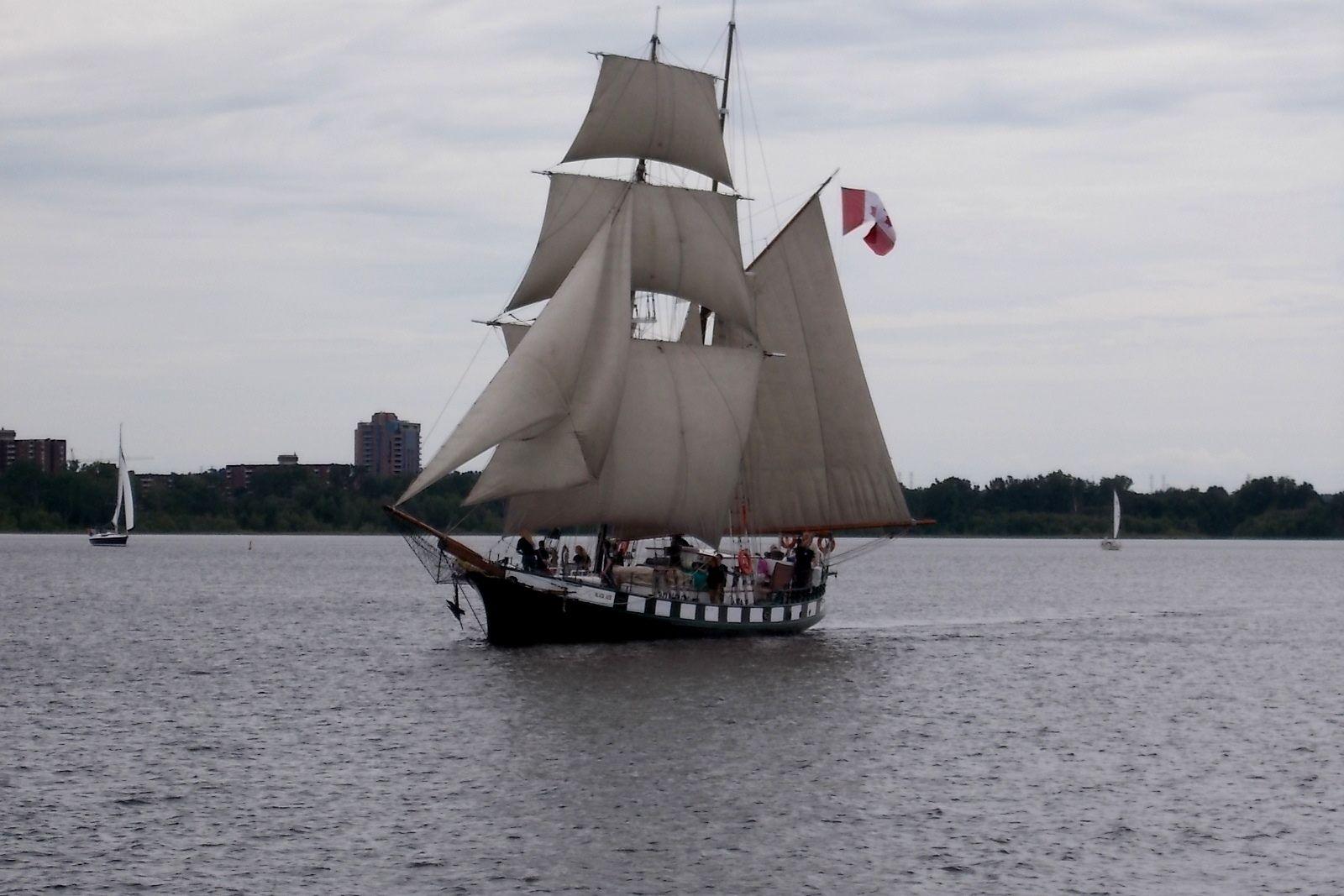
In early December 1872, the crew of the British brigantine Dei Gratia spotted a ship drifting erratically between the Azores and the coast of Portugal. Her sails were wrong for the wind. Nobody answered their hails. When a boarding party climbed over the rail of the Mary Celeste, they found a vessel with plenty of food, plenty of fresh water and not one living soul.
More than 150 years later, nobody can say for certain what happened to the ten people who had been aboard. Captain Benjamin Briggs, his wife Sarah, their two-year-old daughter Sophia and seven crew members were never seen again. No bodies were recovered. No survivor ever came forward.
The facts are strange enough without the embellishment that came later. The ship had left New York on November 7, bound for Genoa with 1,701 barrels of industrial alcohol. The last entry on her slate log placed her near the island of Santa Maria in the Azores on November 25. Then the record stops.
What the boarding party found
The popular version of this story features warm meals on the table and a cat asleep on a bunk. Those details are fiction. The real scene was quieter and in some ways more unsettling. The ship's single lifeboat was gone. Her papers, apart from the logbook, were missing, along with the captain's navigation instruments. There was water sloshing between the decks and about three and a half feet in the hold, which was alarming but nowhere near enough to sink her.
In other words, this was not a ship people had been dragged from. It looked like a ship people had decided to leave, in a hurry but with enough presence of mind to take the tools they would need to navigate. Why would an experienced captain put his wife and toddler into a small open boat in the Atlantic when his ship was still floating?
It looked less like a crime scene than a decision, and nobody has ever explained the decision.
The theories that survive scrutiny
The first official suspicion fell on the people who found her. At the salvage hearing in Gibraltar, attorney general Frederick Solly-Flood pushed theories of mutiny and foul play, pointing to stains that he believed were blood. Tests did not support him, and no evidence ever tied the Dei Gratia's crew to any wrongdoing. The salvors were eventually paid, though only about a fifth of the value of ship and cargo.
The cargo itself is the most popular suspect. When the barrels were unloaded in Genoa, nine of them were empty. One long-running theory holds that fumes from leaking alcohol built up in the hold and that a rumble, a popped hatch or a whiff of vapor convinced Briggs that an explosion was imminent. In 2006, chemist Andrea Sella of University College London staged a demonstration showing that a vapor flash could produce a frightening burst of flame without leaving scorch marks. It's elegant, but it can't be proven.
A second explanation is mechanical. The boarding party found a sounding rod on deck and one of the ship's pumps taken apart. If the pumps had failed and the crew could not tell how much water they were taking on, a cautious captain might have believed the ship was going down. If he had also misjudged his position, the nearest land could have looked deceptively close. Then a small boat, a rising sea and a ship that sailed away without them would be enough.
Add it all up and you get a human ending rather than a supernatural one: a fast decision, based on incomplete information, that could not be undone. That idea sits uncomfortably close to the mental shortcuts we cover in the quiet persuasion tactics people use on you, where the urge to act now tends to beat the urge to check.
How the legend outgrew the facts
Much of what people believe about the Mary Celeste comes from a young Arthur Conan Doyle. His 1884 short story, J. Habakuk Jephson's Statement, renamed the ship the Marie Celeste and supplied dramatic touches that many readers took as fact. The misspelling still appears today.
The ship herself came to a less romantic end. In 1885 her final captain deliberately ran her onto a reef off Haiti in an attempted insurance fraud. The mystery that made her famous has outlasted her by well over a century, and it's likely to keep going, because the one piece of evidence that could settle it was a small boat that vanished into the Atlantic.